

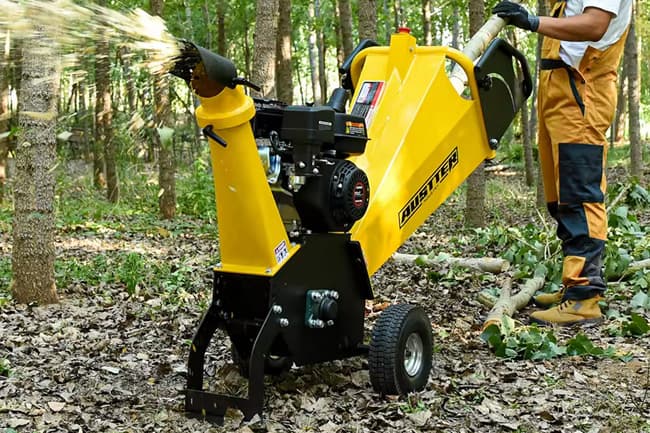
Quick answerThe right wood chipper for a South African property is determined by three things: the maximum branch diameter you need to chip, the volume of material you process per day, and whether you need PTO-driven, engine-driven, or electric power. A homeowner with a half-hectare garden typically needs a 40–65 mm capacity petrol chipper; a game farm, timber estate or municipality needs a 100–200 mm diesel tow-behind or self-propelled unit.
Wood chippers turn prunings, storm debris and invasive alien vegetation into useful mulch — reducing landfill waste, cutting fire risk and feeding your soil. Whether you manage a suburban garden, a wine estate, a game farm or a municipal parks department, there is a machine sized for your needs and budget.
This guide walks you through every buying decision — engine type, chipping capacity, feed mechanism, safety features and eco credentials — and links you to MCM Group branches in Cape Town, George, Gauteng and Bloemfontein so you can demo a machine before you buy.
Why wood chippers matter in South Africa
South Africa’s combination of fire-prone vegetation, invasive alien plants (wattles, Port Jackson, lantana) and water-scarce gardens makes wood chippers more than a convenience — they are a land-management tool. Chipping green waste on-site eliminates transport costs, creates free mulch that retains soil moisture, and reduces the fuel load that drives runaway veld fires in the Western Cape and KwaZulu-Natal.
From a regulatory standpoint, open burning of garden waste is banned in many municipalities, including the City of Cape Town and the City of Johannesburg. A chipper gives landowners a compliant, productive alternative. The resulting wood chips can suppress weeds, moderate soil temperature and slowly return nutrients to the earth — all without a bag of fertiliser or a drop of municipal water wasted on bare soil.
If you already use a mulcher attachment on an excavator or skid steer, a standalone chipper complements that workflow by handling smaller-diameter material and producing a finer, more consistent chip. For a deeper look at mulcher consumables, see our post on different types of mulcher teeth: carbide, knife and swing hammer.
Types of wood chippers: which suits your operation?
Drum chippers
Drum chippers use a rotating steel drum fitted with cutting blades to pull material through a fixed anvil. They are fast, handle mixed material well and produce a relatively uniform chip. Most commercial tow-behind units in the 100–200 mm class use drum technology. The trade-off is higher maintenance cost when blades dull and slightly more power demand from the tractor or engine.
Disc chippers
A heavy steel disc carries the blades and acts as a flywheel, storing kinetic energy between cuts. Disc chippers tend to produce a cleaner, more consistent chip and are the preferred choice for biomass and compost operations where chip quality matters. They are common in the 50–150 mm mid-range.
Screw / spiral chippers
A conical screw draws material in and shreds it progressively. These machines are self-feeding, very safe (they release material if the blade stalls) and ideal for high-volume leafy or green material. They are popular in municipal parks departments and arborist fleets.
Electric chippers
For homeowners and smallholdings with access to a 15–30 A supply, electric chippers (2.5–4 kW) handle branches up to 40 mm quietly and with zero emissions at point of use. Running costs are low and they require minimal maintenance. Load-shedding is the obvious limitation — a petrol backup or battery storage system solves this for most properties.
Key specifications explained
| Spec | What it means | Typical range |
|---|---|---|
| Max branch diameter | Largest single branch the machine will accept | 40 mm – 300 mm |
| Engine / motor power | Determines throughput and ability to handle hardwoods | 2.5 kW electric – 75 kW diesel |
| Chip size | Output particle size; finer = better mulch, coarser = better biomass fuel | 5 mm – 50 mm adjustable |
| Feed speed | How fast material is drawn in; faster = higher productivity | 10 m/min – 25 m/min |
| Hopper width | Determines branch angle and ease of feeding | 250 mm – 600 mm |
| Weight / mobility | Affects towing requirements and site access | 80 kg (homeowner) – 3 500 kg (commercial) |
| Discharge height | How high the machine can throw chips into a truck or bin | 1.8 m – 3.5 m |
Matching the machine to your property type
Residential garden (up to 2 000 m²)
A petrol or electric chipper rated at 40–65 mm branch diameter is sufficient for most suburban gardens. Look for a self-feeding screw or disc mechanism, a folding hopper for storage and a collection bag or chute you can direct into a wheelbarrow. Weight should be under 150 kg so it can be moved by one person.
Smallholding or lifestyle farm (2–50 ha)
Step up to a 75–100 mm petrol or diesel disc chipper on a two-wheel trailer. A Honda GX390 or Briggs & Stratton Vanguard petrol engine handles most fruit-farm prunings and alien clearing. If you run a tractor, a PTO-driven chipper saves on separate engine costs and is easier to service.
Game farm, wine estate or timber property (50 ha+)
At this scale, a self-propelled or heavy tow-behind diesel chipper in the 150–300 mm class makes economic sense. Machines in this category can process several tonnes of material per hour, turning invasive alien clearing into a productive mulch or biomass operation. The same considerations that apply when choosing between wheeled vs tracked skid steers for South African conditions — ground pressure, terrain, fuel logistics — apply here too.
Municipality or arborist fleet
Truck-mounted or heavy tow-behind chippers with 200–300 mm capacity, hydraulic feed control and a high-discharge chute for loading directly into tipper trucks are the standard. Reliability and parts availability are critical; choose a brand with a South African dealer network and a local service centre.
Power source: petrol, diesel, electric or PTO?
South Africa’s load-shedding environment makes petrol and diesel the default for any operation that cannot tolerate downtime. Diesel engines are more fuel-efficient at sustained high load and last longer between overhauls — the right choice for commercial or daily-use machines. Petrol suits occasional residential use where the lower purchase price and simpler carburettor servicing outweigh the higher fuel cost per hour.
PTO-driven chippers are the most cost-effective option if you already own a tractor with a matched power output. They eliminate a separate engine, reduce overall weight and are straightforward to service. The limitation is that the tractor must be present and running — you cannot use the chipper independently.
Electric chippers produce zero on-site emissions, are quieter than petrol equivalents and cost less to run per hour. For a homeowner committed to a sustainable garden, an electric chipper paired with rooftop solar is the lowest-impact option available.
Sustainability and eco-friendliness: why chippers are a green investment
A wood chipper is one of the most genuinely sustainable pieces of garden or farm equipment you can buy. Here is why:
- Closed-loop nutrient cycling: Chips returned to the soil feed fungi, bacteria and earthworms, rebuilding organic matter without synthetic inputs.
- Water retention: A 75–100 mm layer of wood chip mulch can reduce evaporation by up to 70%, critical in South Africa’s water-scarce regions. The Department of Water and Sanitation actively promotes mulching as part of water-wise landscaping.
- Invasive alien control: Chipping cleared alien vegetation on-site prevents regrowth from seeds left in stockpiles and avoids the need to transport material to a landfill.
- Carbon sequestration: Incorporating wood chip compost into soil locks carbon into stable humus rather than releasing it as CO₂ through burning or landfill decomposition.
- Reduced chemical use: Weed suppression through mulching reduces reliance on herbicides, which is particularly relevant near waterways and in organic production systems.
- Biomass energy: Coarser chips from hardwoods can fuel biomass boilers or pizza ovens, displacing fossil fuel use on the property.
For operations that also use attachments on excavators or loaders, the sustainability logic extends across the fleet. See our guide on how to choose an excavator in South Africa for context on matching attachments to base machines.
Safety features to look for
Wood chippers are powerful machines and injuries, though rare with modern equipment, can be severe. South African operators should look for the following safety features as a minimum:
- Anti-kickback feed roller: Prevents material from being ejected back through the hopper.
- Emergency stop bar / dead-man bar: A bar around the hopper that immediately halts the feed roller when pushed — the single most important safety feature on any chipper.
- Blade engagement delay: A time delay between starting the engine and engaging the cutting mechanism prevents accidental start-up injuries.
- Discharge deflector: Allows the operator to direct the chip stream away from people, vehicles and structures.
- Overload protection: Automatic disengagement or reverse feed when a blockage is detected, preventing blade damage and operator injury.
- CE / SANS compliance: Look for machines built to SABS or equivalent European EN 13525 standards for forestry chippers, which specify minimum guard dimensions, noise levels and feed-opening geometry.
Operator training is equally important. Never feed material while standing in line with the discharge chute, always wear cut-resistant gloves and eye protection, and keep bystanders at least 10 metres from the machine during operation.
Budget and finance options in South Africa
Entry-level electric chippers start at around R3 000–R8 000. Mid-range petrol disc chippers (65–100 mm) sit between R15 000 and R60 000. Commercial diesel tow-behind units in the 150–200 mm class range from R120 000 to R400 000+, and self-propelled truck-mounted machines can exceed R1 million.
For smallholding and commercial buyers, equipment finance spreads the capital cost over 24–60 months and preserves working capital for consumables, fuel and labour. Our first-time buyer’s guide to equipment finance in South Africa explains the options — instalment sale, lease and rental purchase — and what documents you will need.
VAT-registered businesses can claim the input VAT on a chipper purchase, and SARS Section 11(e) wear-and-tear allowances apply to productive agricultural and forestry equipment. Speak to your accountant about accelerated depreciation under the SARS farming income provisions if the machine is used in primary agricultural production.
What to check before you buy
- Measure your largest material: Take a calliper to the thickest branch you regularly prune and add 20% — that is your minimum rated capacity.
- Assess daily volume: A two-hour weekend pruning session needs a very different machine from a full-day alien clearing operation.
- Check parts availability: Blades, belts and bearings must be available locally. Ask the dealer for lead times on consumables before signing.
- Inspect the feed mechanism: Self-feeding machines reduce operator fatigue and injury risk significantly; worth paying for on any machine used more than two hours per week.
- Test the discharge: Can the chute be rotated 270°? Can it reach into your truck or trailer without repositioning the machine?
- Ask about noise: Residential areas and wine estates with tourism operations have noise-sensitivity. Electric or well-muffled diesel machines may be necessary.
Missed us / Want to know more? Contact MCM Group for pricing, finance and a quote on wood chippers and related equipment at our branches in Cape Town, George, Gauteng and Bloemfontein.
The MCM Group wood chipper range
Ready to buy? MCM Group stocks wood chippers for every property size, from compact diesel units to heavy PTO-driven tractor attachments. Four popular models:
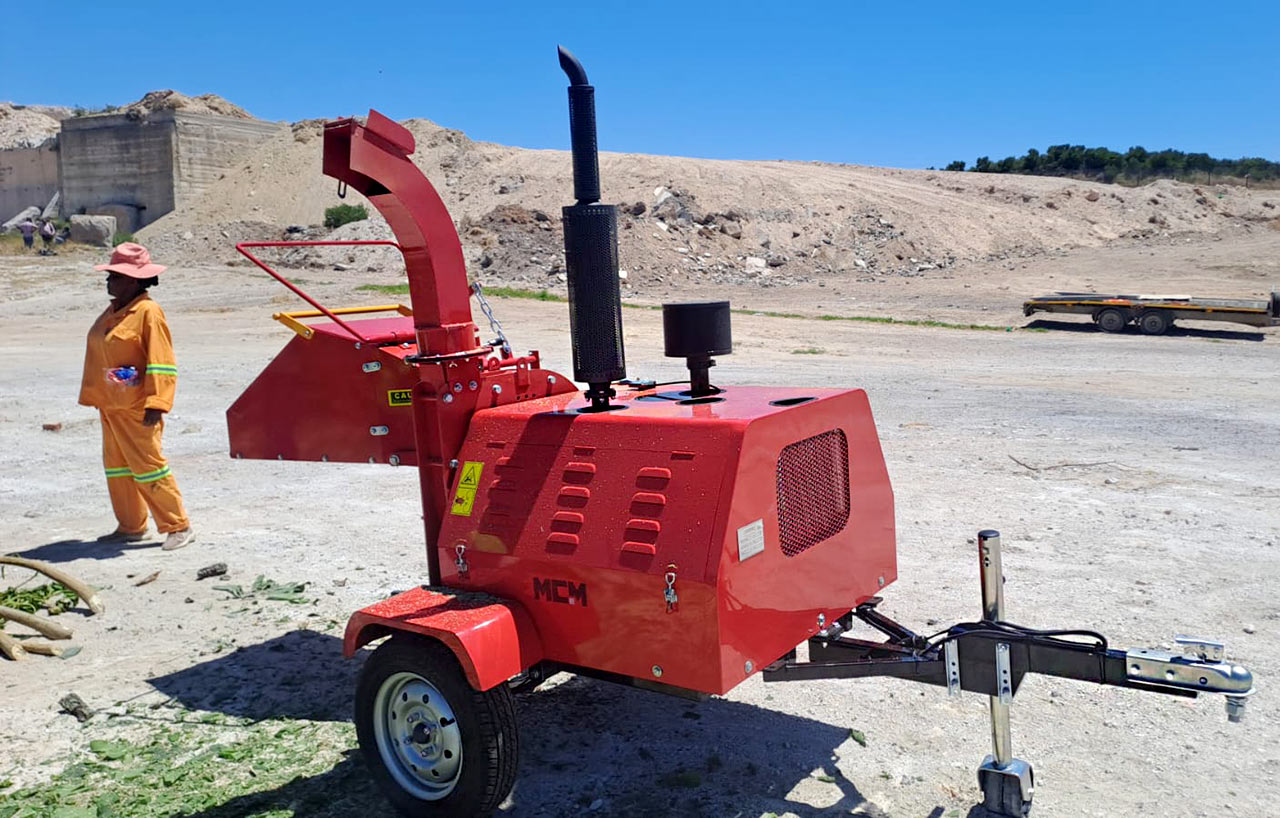
MCM DWC40 Diesel Wood Chipper — a compact, self-powered diesel chipper for smallholdings and estates that want independence from a tractor
MCM DWC50 Diesel Wood Chipper — a higher-capacity diesel unit for larger properties and heavier daily volumes
MCM TM56H PTO Tractor Wood Chipper — a PTO-driven chipper that runs off your tractor, cost-effective if you already own a matched tractor
MCM TM86H PTO Tractor Wood Chipper — the larger PTO model for game farms, timber estates and high-volume alien-clearing operations
Browse the full MCM wood chipper range
Frequently asked questions
What are the environmental benefits of using a wood chipper?
Wood chippers convert green waste into mulch or compost on-site, eliminating the need to burn or landfill material. This reduces greenhouse gas emissions, returns organic matter and nutrients to the soil, suppresses weeds without herbicides, and conserves soil moisture — reducing irrigation demand. Chipping invasive alien plants also prevents seed dispersal that occurs when material is stockpiled or transported.
How do wood chippers contribute to sustainable gardening practices?
By producing wood chip mulch, a chipper closes the nutrient loop on your property: prunings and fallen branches become a free soil conditioner rather than waste. A 75–100 mm mulch layer can cut evaporation by up to 70%, reduce weeding time, moderate soil temperature and feed soil microbes — all without purchased inputs. Over time, incorporated chip compost builds organic matter and improves water infiltration, making your garden more drought-resilient.
What types of materials can be effectively processed by wood chippers?
Most drum and disc chippers handle green and dry branches, prunings, palm fronds, bamboo canes, Christmas trees and woody shrub stems. Some models also process leafy material, though pure leaf loads can clog feed rollers. Materials to avoid include wire, stones, roots with heavy soil attached, and very resinous or gummy wood that can coat blades rapidly. Always check the manufacturer’s material guide for your specific model.
Are there eco-friendly wood chipper options available in South Africa?
Yes. Electric chippers (2.5–4 kW) produce zero on-site emissions and are the most eco-friendly option for residential use, especially when powered by rooftop solar. For larger operations, modern diesel chippers with Tier 4 Final or Stage V engines emit significantly less particulate matter and NOx than older designs. PTO-driven chippers that run off a tractor’s engine avoid a separate combustion unit entirely, reducing the overall carbon footprint of the operation.
How can I use wood chips from a chipper in my gardening or landscaping?
Fresh wood chips work best as a surface mulch around trees, shrubs and pathways — apply 75–100 mm deep, keeping chips 100 mm away from stems and trunks to prevent rot. Aged chips (composted for 6–12 months) can be dug into vegetable beds to improve soil structure. Coarser chips make excellent permeable pathways. Hardwood chips from alien species such as wattle or eucalyptus also make excellent fuel for biomass boilers or braai wood.
What safety features should I look for in an eco-friendly wood chipper?
The most important safety feature is an emergency stop / dead-man bar around the hopper that halts the feed roller instantly. Beyond that, look for an anti-kickback feed roller, a lockable discharge deflector, overload protection with automatic reverse, a blade engagement delay on start-up, and compliance with EN 13525 or equivalent SABS standards. For eco-friendly operation, also check that the machine uses biodegradable hydraulic fluid options and has a drip tray to prevent oil contamination of the soil.