

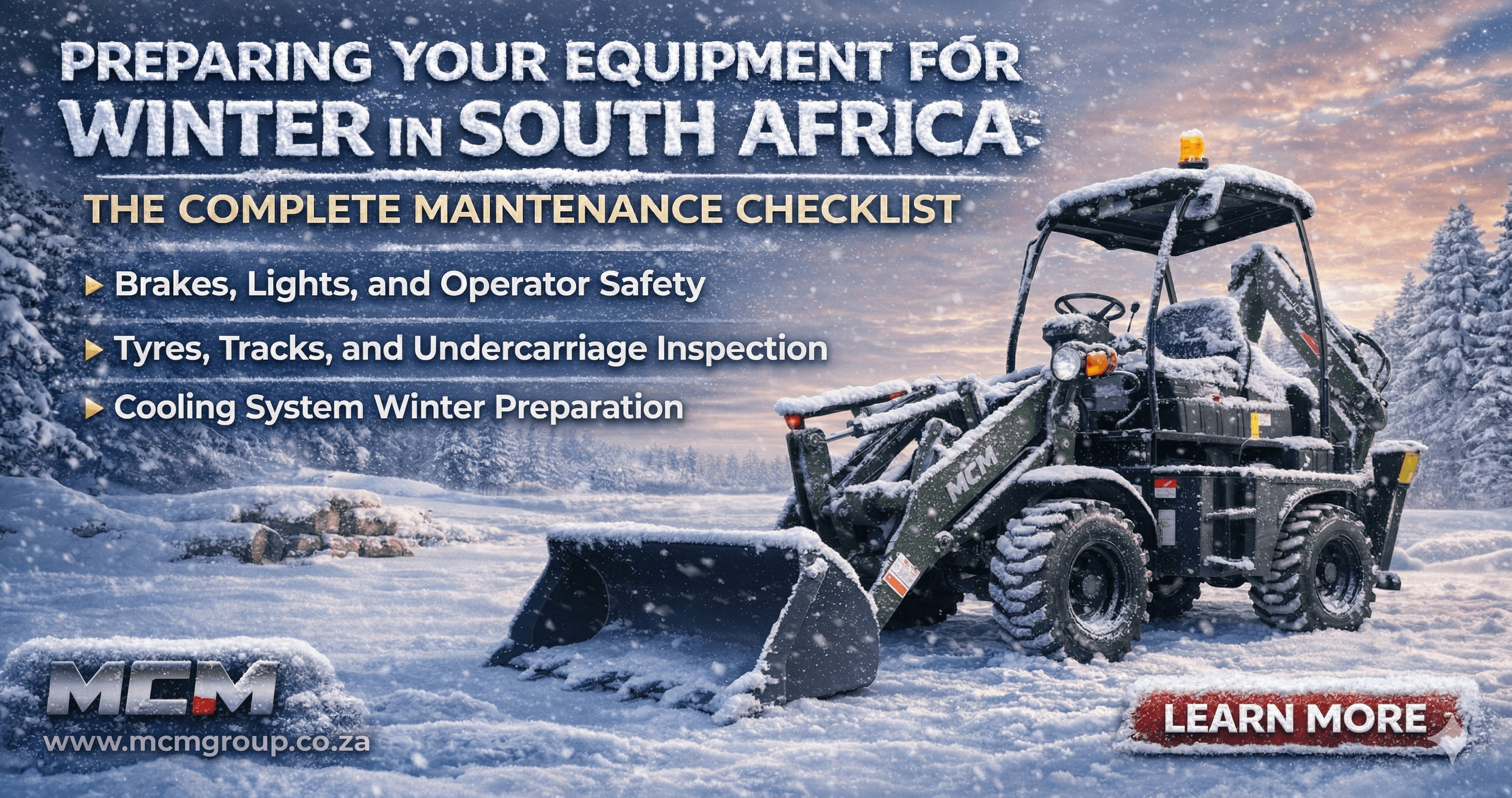
Quick answer
Winter equipment maintenance is a routine that is designed to protect machines from cold-weather damage, because low temperatures thicken the oil, weaken the battery and crack worn seals on a TLB, loader or excavator.
A proper winter check provides reliability through the cold months, and it allows you to catch a flat battery, a thin coolant mix or a perished hose before it strands a machine on a site.
Cold-weather care involves checking the coolant, the battery, the glow plugs and the hydraulic oil, and each step is designed to keep a diesel machine starting and working through low temperatures.
This checklist describes the maintenance a South African operator does before winter, which provides fewer breakdowns and a longer working life for expensive construction equipment.
Winter equipment maintenance keeps your TLBs, front end loaders, excavators, and road rollers running through South Africa’s cold, wet months — from frozen hydraulics on the Highveld to mud-clogged undercarriages in the Western Cape. This guide gives you a complete checklist, a cold-start procedure, and storage tips for idle machines.
In short, winter equipment maintenance protects your investment and prevents avoidable breakdowns. Frost inland, heavy rain along the coast, cold starts, and muddy sites all increase the risk of battery failure, hydraulic sluggishness, corrosion, and unplanned downtime. As a result, a proper pre-winter inspection and service can reduce breakdown risk, improve reliability, and limit costly lost working days.
Need winter service parts or maintenance advice? Contact MCM Group — our parts team supplies filters, fluids, batteries, and consumables for the full range from branches in Cape Town, George, Gauteng, and Bloemfontein.
Why Winter Hits Construction Equipment Hard in South Africa
South African winters vary dramatically by region. Consequently, each climate zone creates specific risks for your machinery — and your winter equipment maintenance approach needs to match your location.
Gauteng, Free State, and inland regions experience overnight frost from May through August. As a result, temperatures below zero thicken hydraulic oil, drain batteries, and make cold starts brutal on engines. On top of that, frost hardens the ground — increasing stress on bucket teeth, cutting edges, and undercarriage components.
Western Cape and Garden Route bring heavy winter rainfall. As a result, mud, standing water, and consistently wet conditions accelerate corrosion, clog air filters faster, and create traction problems for wheeled machines like loaders and backhoe loaders.
KwaZulu-Natal and coastal areas stay warmer, yet salt air and humidity create their own risks. In particular, these conditions speed up rust on exposed metal, hinges, pins, and electrical connections — especially on machines parked outdoors overnight. Similarly, machines operating near coastal Garden Route towns like Mossel Bay, Knysna, and Plettenberg Bay should watch for salt-spray corrosion on exposed components.
The Complete Winter Equipment Maintenance Checklist
Use this winter equipment maintenance checklist before the cold weather sets in. In fact, printing it and sticking it on the workshop wall is the simplest way to make sure every machine in your fleet gets covered.
Engine and Fuel System Checks for Winter
- Change engine oil and filter: Cold weather thickens oil. Use the viscosity and specification recommended in the operator’s manual. In many South African winter conditions, 15W-40 remains the standard for heavy diesel equipment, while 10W-30 may offer better cold-flow for very cold inland starts. The correct grade depends on the engine design and ambient temperatures — so always confirm with the manual or your parts supplier.
- Replace the fuel filter: Diesel can form wax crystals in cold conditions, so a fresh fuel filter reduces the risk of blockages during cold starts.
- Consider a fuel additive: In frost-prone areas like Gauteng and the Free State, an anti-wax or anti-gel diesel additive can prevent fuel line blockages on very cold mornings. Check the additive is compatible with your engine.
- Drain water from the fuel separator: Water in diesel causes injector damage, so drain the water separator daily during winter — especially on machines that sit idle over weekends.
Air Intake and Glow Plug Checks
- Check the air filter: Wet, muddy sites clog air filters fast. Therefore, inspect and clean or replace before winter begins. A restricted air filter robs engine power and increases fuel consumption.
- Inspect glow plugs: Since glow plugs are essential for cold-starting diesel engines, test each one before winter. Even a single failed glow plug can make a cold morning start extremely difficult.
Hydraulic System Winter Service
- Check hydraulic oil level and condition: Low or contaminated hydraulic oil causes sluggish, unresponsive performance in cold weather. For instance, milky oil indicates water contamination and dark oil indicates oxidation — both require replacement.
- Warm up before working: Run the engine at idle for 5–10 minutes before operating hydraulic controls, because cold hydraulic fluid is thick and less responsive. In fact, forcing the system immediately can damage seals and pumps, and may also cause dangerous pressure spikes in cold hoses.
- Inspect all hydraulic hoses and fittings: Cold temperatures make rubber hoses brittle over time, leading to cracks and eventual failure. Specifically, look for cracks, bulges, and weeping at fittings — and replace any hose that shows wear, since a burst hydraulic line shuts down the machine instantly.
- Replace hydraulic filters: Contaminated hydraulic fluid causes valve sticking and pump wear, so fresh filters going into winter protect the entire system.
Battery and Electrical System Checks
- Test battery voltage: A fully charged 12V battery should read 12.6V or higher. Below 12.4V, it may struggle to crank in cold conditions. Consequently, load-test older batteries or any unit showing slower cranking and repeated charging issues.
- Scrub battery terminals: Corrosion on terminals increases resistance and reduces cranking power, so clean them with a wire brush and apply terminal grease or petroleum jelly.
- Verify alternator output: A healthy alternator must charge at 13.8–14.8V while running. Although a weak alternator may go unnoticed in summer, cold mornings quickly expose the problem.
- Inspect wiring and connections: Look for chafed wires, loose connectors, and rodent damage. Rodents often nest in engine bays during winter, so check for chewed wiring and nesting material before the first start of each week.
Cooling System Winter Preparation
- Check coolant type and concentration: Use the correct coolant type and concentration specified by the manufacturer. In many frost-prone inland areas, a 50:50 antifreeze-to-water mix is standard for freeze and corrosion protection. Avoid over-concentrating beyond 60% — this actually reduces heat transfer efficiency.
- Inspect radiator hoses and clamps: Cold-hot cycles stress hoses over time. In other words, squeeze each hose — and if it feels soft, spongy, or cracked, replace it before it fails on site.
- Flush the cooling system: If the coolant is older than two years or looks rusty, flush the entire system and refill with fresh coolant — because old coolant loses its corrosion inhibitors over time.
Tyres, Tracks, and Undercarriage Inspection
- Measure tyre pressures: Cold air reduces tyre pressure — roughly 1–2 PSI for every 10°C drop. As a result, under-inflated tyres wear unevenly, reduce traction, and increase fuel consumption on wheeled machines like front end loaders.
- Inspect tread depth, sidewalls, and cuts: Wet winter sites demand good traction. Worn or damaged tyres on a loaded MCM 37X TLB or MCM 920 loader are a safety risk in mud, because cuts and cracks worsen quickly in wet conditions.
- Verify track tension and sprocket wear: For tracked machines like mini excavators, packed mud that freezes and thaws repeatedly can damage track components. In this case, confirm tension is within spec and inspect sprockets, idlers, and rollers for wear.
- Wash tracks and undercarriage daily: Mud packed into the undercarriage adds weight, accelerates wear, and freezes overnight in frost-prone areas. Consequently, hose it off at the end of each shift.
- Grease every scheduled lubrication point: Fresh grease pushes out moisture and protects moving parts from corrosion. Cover arms, boom, bucket pins, slew ring, and stabiliser legs. In wet regions like George or Cape Town, increase greasing frequency to daily for any pins regularly submerged in mud or water. Use a lithium-based or winter-grade grease for better cold-weather performance.
Brakes, Lights, and Operator Safety
- Inspect brakes: Wet and slippery conditions demand reliable braking, so check brake pads, discs, and parking brakes on all TLBs, loaders, and rollers. In particular, mud and moisture can reduce braking effectiveness significantly.
- Confirm all lights work: Because winter brings shorter daylight hours, rain, and fog, you need every work light, headlight, tail light, and safety beacon functioning correctly. Replace blown bulbs before they become a visibility hazard.
- Run the heater and demister: A fogged-up windscreen is a serious visibility hazard, so confirm both systems work before cold weather arrives. Naturally, poor demisting in rain or fog directly affects operator safety.
- Swap worn wiper blades: Winter rain and mud demand effective wipers, so replace cracked or streaking blades and top up washer fluid.
- Look at door seals and windows: Leaking seals let cold air and rain into the cab, which affects operator comfort and concentration. Therefore, replace worn seals promptly.
How to Store Construction Equipment During Winter
If a machine sits idle during winter — whether it is a cherry picker, a seasonal wood chipper, or a road roller between contracts — take these steps to protect it.
- Fill the fuel tank: Keeping the tank full prevents condensation from forming inside, because water in diesel causes injector damage and bacterial growth over time.
- Disconnect or trickle-charge the battery: Left discharged in cold weather, a battery sulphates and eventually dies. Either disconnect it or connect a quality trickle charger to maintain charge.
- Retract all hydraulic cylinders: Exposed chrome cylinder rods corrode quickly in damp conditions. As a result, retract them fully and apply a light coat of grease if the machine will sit for more than a month.
- Cover the exhaust and air intake: Use a suitable temporary cover to keep out moisture and pests. Make sure you remove it before restarting the machine.
Parking and Weekly Run-Up
- Park on hard standing: Avoid parking on bare earth or grass, since moisture wicks up and accelerates undercarriage corrosion. Concrete or gravel is best.
- Run the machine to operating temperature weekly: If you start an idle machine during storage, run it long enough to reach normal operating temperature and circulate fluids properly. A short idle-only start that never warms up can increase internal condensation rather than reduce it — so commit to at least 15–20 minutes at proper temperature.
Cold-Start Procedure for Diesel Construction Equipment
Cold mornings in Gauteng, Free State, and the Highveld test every diesel engine. In practice, following this cold-start procedure is one of the most important parts of winter equipment maintenance — because a bad start can cause real damage.
- Turn the key to the preheat/on position without cranking. Wait for the glow plug indicator light to go out — this takes 10–30 seconds depending on the machine.
- Crank the engine. Do not hold the starter for more than 15 seconds. If the engine does not fire, wait 30 seconds before trying again.
- Let the engine idle until it reaches operating temperature. Allow 5–10 minutes. Do not rev or engage hydraulics immediately — cold oil needs time to circulate and warm up.
- Operate controls gently at first. Move boom, arm, and bucket slowly for the first few minutes. This warms the hydraulic fluid through the circuit gradually.
- Monitor gauges. Watch the coolant temperature and oil pressure. If anything reads abnormal, shut down and investigate before continuing work.
Importantly, never use ether-based starting spray unless the manufacturer specifically recommends it in the operator’s manual. Ether can cause engine damage on machines with glow plug systems — and most MCM, ACE, and HZM equipment falls into this category. Instead, test and replace faulty glow plugs as part of your winter equipment maintenance routine.
Printable Winter Equipment Maintenance Checklist
Above all, having a printed quick-reference version of this winter equipment maintenance checklist in your workshop or site office makes it easy to stay on track.
| System | Action | Done? |
|---|---|---|
| Engine | Change oil and filter (correct winter-grade viscosity per manual) | ☐ |
| Engine | Replace fuel filter | ☐ |
| Engine | Add anti-wax fuel additive (frost-prone areas) | ☐ |
| Engine | Drain water from fuel separator | ☐ |
| Engine | Clean or replace air filter | ☐ |
| Engine | Test glow plugs | ☐ |
| Hydraulics | Check oil level and condition | ☐ |
| Hydraulics | Inspect hoses and fittings for cracks | ☐ |
| Hydraulics | Replace hydraulic filters | ☐ |
| Battery | Test voltage (12.6V minimum) | ☐ |
| Battery | Clean terminals and apply grease | ☐ |
| Battery | Check alternator output (13.8–14.8V) | ☐ |
| Battery | Inspect wiring for rodent damage | ☐ |
| Cooling | Check coolant type and concentration | ☐ |
| Cooling | Inspect radiator hoses and clamps | ☐ |
| Tyres/Tracks | Check tyre pressures | ☐ |
| Tyres/Tracks | Inspect tread, sidewalls, and cuts | ☐ |
| Tyres/Tracks | Check track tension and sprocket wear | ☐ |
| Tyres/Tracks | Clean undercarriage daily | ☐ |
| Lubrication | Grease all pins, bushes, and pivot points | ☐ |
| Brakes | Inspect brake pads, discs, and parking brake | ☐ |
| Lights | Test work lights, headlights, and beacons | ☐ |
| Cab | Test heater, demister, and wipers | ☐ |
| Cab | Inspect door seals and windows | ☐ |
Keep Spare Consumables on Hand
In addition to completing your winter equipment maintenance checklist, stock shortages are common once the cold weather hits. Therefore, order these spares in advance so you are not waiting for delivery when a machine goes down.
- Engine oil filters and fuel filters
- Hydraulic filters
- Engine oil (correct grade)
- Coolant concentrate
- Drive belts and fan belts
- Hose clamps and hydraulic fittings
- Battery terminals and cable ends
- Grease cartridges (lithium-based or winter-grade)
- Wiper blades and washer fluid
- Glow plugs (for your specific engine)
Not sure which parts your machine needs? Contact your nearest MCM branch — the parts team can look up your serial number and confirm the correct specifications.
Winter Parts and Service Support from MCM Group
MCM Group stocks filters, hydraulic oil, batteries, coolant, wiper blades, belts, and other consumables for the full range of MCM, ACE, HZM, Everun, LGMA, and Carter machines. Since the company was established in 2008 and has built extensive experience importing and distributing equipment across Southern Africa, the parts team knows exactly what each machine needs — and can supply it quickly from four branches nationwide.
This is especially important for mini skidsteers, telescopic loaders, and newer models where aftermarket parts may not be a direct fit. Call your nearest branch with your machine’s serial number and the team will confirm the correct part numbers and availability.
Your Questions Answered
How do I prepare my TLB for winter in South Africa?
What oil grade should I use in construction equipment during winter?
Should I warm up my excavator before working in cold weather?
More Winter Equipment Maintenance Questions
How do I store construction equipment that sits idle over winter?
Where can I get winter service parts for MCM equipment?
Can cold weather damage hydraulic hoses?
Is it safe to use starting spray on diesel construction equipment?
Sources & References
Disclaimer: This article provides general maintenance guidance for construction and agricultural equipment. Always refer to your machine’s operator manual for manufacturer-specific service intervals, fluid specifications, and procedures. MCM Group is an equipment distributor, not a certified repair facility. For complex repairs or warranty work, consult a qualified diesel mechanic or contact MCM Group’s service department.
- South African Weather Service — seasonal winter climate patterns for frost, rainfall, and regional weather variation
- SAFCEC — South African Forum of Civil Engineering Contractors
- OEM operator manuals — recommended source for exact oil grade, coolant spec, and service procedures for your specific machine
Find Us Nationwide
MCM Group has branches in Cape Town (Kraaifontein), George, Gauteng (Samrand, Midrand), and Bloemfontein. Walk in, call, or get in touch online for parts, service advice, and competitive quotes on any machine in the MCM range.