Frequently Asked Questions About Spider Cranes
What is a spider crane?
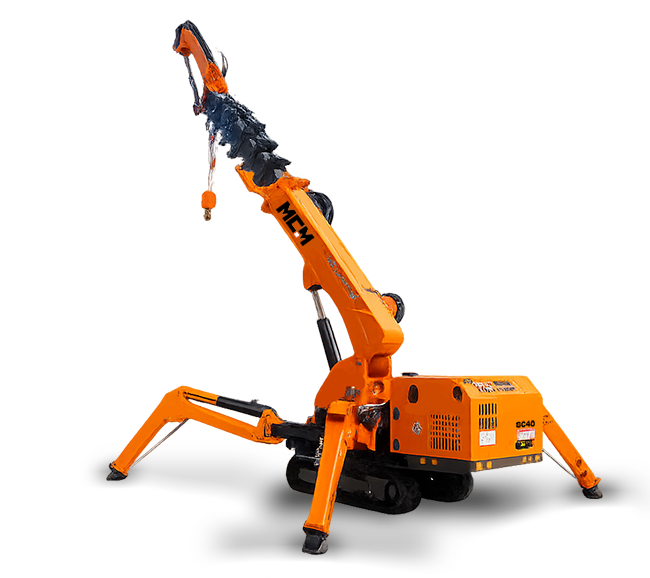
A spider crane is a compact, lightweight crane with extendable outrigger legs that resemble a spider. They are designed to access confined spaces, work indoors, and lift heavy loads in areas where conventional cranes cannot operate.
What can a spider crane lift?
Spider cranes can lift loads ranging from 1 to 10 tonnes depending on the model, with reach heights of up to 17 metres. They are used for glass installation, steel erection, machinery placement, and indoor construction work.
Why use a spider crane instead of a regular crane?
Spider cranes can fit through standard doorways, operate on sensitive flooring, and work in confined spaces where mobile cranes cannot access. Their compact size and low ground pressure make them ideal for indoor and restricted-access lifting.
In South Africa, spider cranes are most frequently used for glazing work on multi-storey buildings — lifting large glass panels and curtain wall elements that cannot be manually carried to upper floors. Their compact body fits into standard lifts and through emergency exit doorways, allowing the crane to be transported to the installation floor and set up without external access equipment.
Heritage restoration projects present another common application. When heavy stone elements, ornamental metalwork or structural timbers must be lifted in buildings where scaffold would be intrusive or impractical, a spider crane's low ground pressure and small footprint allow it to operate on existing floors without damage.
Outrigger span determines how much a spider crane can lift safely. Most models have variable outrigger geometry — the legs can be set at different extension positions to maximise stability within the available floor space. Always consult the load chart for the specific outrigger configuration being used on the lift.
MCM Group supplies spider cranes with full operator training, rigging certification support and after-sales service. Our branches in Cape Town, George, Gauteng and Bloemfontein can assist with model selection based on your maximum lift weight, required working radius and site access constraints. Finance options include operating lease and instalment sale.