
Quick answer
For most South African operations running a single shift, a diesel forklift remains the safest bet during unpredictable load shedding — but businesses with on-site solar, a UPS-backed charging bay, or multi-shift schedules can make electric forklifts work effectively and at lower long-term cost. The right answer depends on your grid reliability, shift pattern, and total cost of ownership over five years.
The choice of forklift configuration has always involved trade-offs, but load shedding has added an entirely new dimension to the diesel vs electric forklift South Africa debate. With Eskom’s stage rotations continuing into 2026 and many municipalities still implementing their own supplementary cuts, warehouse managers and logistics operators can no longer evaluate forklifts on purchase price and fuel cost alone.
This guide gives you a frank, numbers-grounded comparison of diesel and electric forklifts under South African load-shedding conditions — covering uptime, total cost of ownership, environmental impact, and the charging infrastructure questions that most salespeople avoid. MCM Group supplies and supports both forklift types from branches in Cape Town, George, Gauteng, and Bloemfontein.
Why load shedding changed the forklift conversation
Before 2019, the electric forklift case in South Africa was straightforward: lower running costs, zero tailpipe emissions, quieter operation, and simpler servicing. Diesel forklifts were chosen mainly for outdoor use, higher lift capacities, or operations where recharging logistics were impractical.
Load shedding flipped that calculus. An electric forklift that cannot be charged during a four-hour Stage 4 outage — or that arrives at the start of a night shift with a depleted battery because the charger was offline all afternoon — becomes a liability rather than an asset. Diesel, by contrast, keeps running as long as there is fuel in the tank. This explains the uptick in diesel forklift enquiries MCM Group has seen from the Western Cape and Free State, regions that historically favoured electric machines for indoor cold-store and FMCG applications.
The good news for 2026 is that South Africa’s load-shedding frequency has reduced compared with the peak stages of 2023, and solar-plus-battery installations have proliferated rapidly across commercial and industrial properties. That changes the equation again — and is why this decision now requires a site-specific assessment rather than a blanket rule.
Head-to-head comparison: diesel vs electric forklift under load shedding
| Factor | Diesel Forklift | Electric Forklift |
|---|---|---|
| Uptime during outages | Unaffected — runs on stored fuel | Depends on battery state of charge at outage start |
| Fuel / energy cost (per shift) | R180–R320 (diesel at ~R22/L) | R30–R80 (grid) / R15–R50 (solar) |
| Scheduled maintenance intervals | Every 250–500 hrs (oil, filters, injectors) | Every 500–1 000 hrs (battery checks, brake fluid) |
| Typical 5-year service cost | High — engine, exhaust, fuel system | Low — fewer moving parts, no exhaust system |
| Indoor air quality | Poor — CO and NOx emissions | Excellent — zero tailpipe emissions |
| Noise level | 75–85 dB(A) | 60–70 dB(A) |
| Purchase price (3-tonne class) | R350 000–R550 000 | R380 000–R620 000 |
| Load-shedding mitigation cost | Nil — fuel storage only | R80 000–R250 000 (UPS or solar charger) |
| Carbon footprint | High — direct combustion emissions | Low to medium (depends on grid mix) |
| Resale value after 5 years | Moderate | Moderate to good (battery condition critical) |
Total cost of ownership: the five-year picture
Purchase price is the number that dominates most buying conversations, but it is rarely the number that matters most. Over a five-year, single-shift operation running approximately 2 000 hours per year, the total cost of ownership (TCO) typically breaks down as follows.
A diesel forklift in the 2.5–3 tonne class will consume roughly 3–4 litres of diesel per operating hour. At current South African pump prices that equates to R66–R88 per hour, or R132 000–R176 000 per year in fuel alone. Add scheduled service costs of R40 000–R70 000 per year and the five-year running cost (excluding purchase price) sits comfortably above R800 000 for most operators.
An equivalent electric forklift drawing 15–20 kWh per shift costs R30–R80 per shift on Eskom tariffs, and as little as R15–R50 if the facility has rooftop solar. Annual energy costs of R7 500–R20 000 are realistic. Service costs are substantially lower — battery water top-ups, brake checks, and annual electrical inspections typically total R15 000–R30 000 per year. Five-year running costs can be less than R250 000, a saving of R550 000 or more versus diesel.
The caveat is the battery replacement cycle. Lead-acid traction batteries — still common in South Africa — have a lifespan of 1 200–1 500 charge cycles under good conditions. In a load-shedding environment where batteries are opportunity-charged or partially discharged and recharged repeatedly, cycle life can drop to 800–1 000 cycles, bringing forward a replacement cost of R80 000–R150 000. Lithium-ion (Li-ion) batteries tolerate partial charging far better and are increasingly available in the South African market, though they carry a higher upfront premium of R120 000–R200 000 over lead-acid equivalents.
Charging infrastructure and load shedding: what you actually need
The most common reason businesses abandon electric forklifts after a load-shedding incident is inadequate charging infrastructure planning. A standard 48V / 80A lead-acid charger requires 8–10 hours for a full charge. If load shedding removes 4 hours of charging time per day, a single-shift operation may still be fine — but a double-shift operation will almost certainly run short.
Practical mitigation options, in ascending order of cost and reliability, include:
- Opportunity charging during load-shedding windows: schedule charging during known off-peak outage periods using the published Eskom schedule. Low cost but operationally demanding.
- UPS / battery backup for the charger: a 10–20 kWh lithium battery backup system (R80 000–R150 000 installed) keeps a single charger running through a 4-hour Stage 4 outage. Suitable for single-forklift operations.
- On-site solar with battery storage: a 15–30 kWp rooftop system with 20–40 kWh storage (R200 000–R450 000 installed) can charge one or two forklifts independently of the grid. This is increasingly the preferred solution for FMCG cold stores and food-processing facilities.
- Li-ion forklift batteries: faster charge rates (2–4 hours for 80% charge), tolerance of partial cycles, and built-in battery management systems make Li-ion the most load-shedding-resilient electric option. Higher upfront cost is offset by longer battery life and reduced opportunity-charging complexity.
It is worth noting that the same infrastructure assessment applies to other battery-powered equipment on your site. If you are already running electric or hybrid excavators or other plant, a consolidated solar-and-storage investment may serve multiple machines and deliver a faster return.
Environmental impact: the honest picture
Electric forklifts are marketed as zero-emission machines, and at the point of use that is true. However, South Africa’s grid remains heavily coal-dependent — the Eskom generation mix still derives more than 80% of its energy from coal-fired power stations. Charging an electric forklift from the national grid therefore carries an indirect carbon cost of approximately 0.9–1.0 kg CO₂ per kWh, which is among the highest grid emission factors in the world.
That said, the comparison with diesel is still favourable. A diesel forklift burning 3.5 litres per hour emits roughly 9.3 kg of CO₂ per hour at the stack, plus particulate matter and NOx that directly affect indoor air quality. An electric forklift charged from the grid emits the equivalent of approximately 13–18 kg CO₂ per shift (8 hours, 15–20 kWh) — comparable to the diesel machine — but with zero indoor emissions.
The environmental case for electric forklifts improves dramatically with solar charging. A facility generating its own renewable electricity effectively reduces the operational carbon footprint of its forklift fleet to near zero, while simultaneously insulating itself from load shedding and Eskom tariff increases. The Department of Forestry, Fisheries and the Environment has flagged industrial electrification as a priority under South Africa’s updated Nationally Determined Contribution, and businesses that document their emissions reductions may benefit from future carbon offset or reporting advantages.
Diesel forklift strengths: where it still wins in 2026
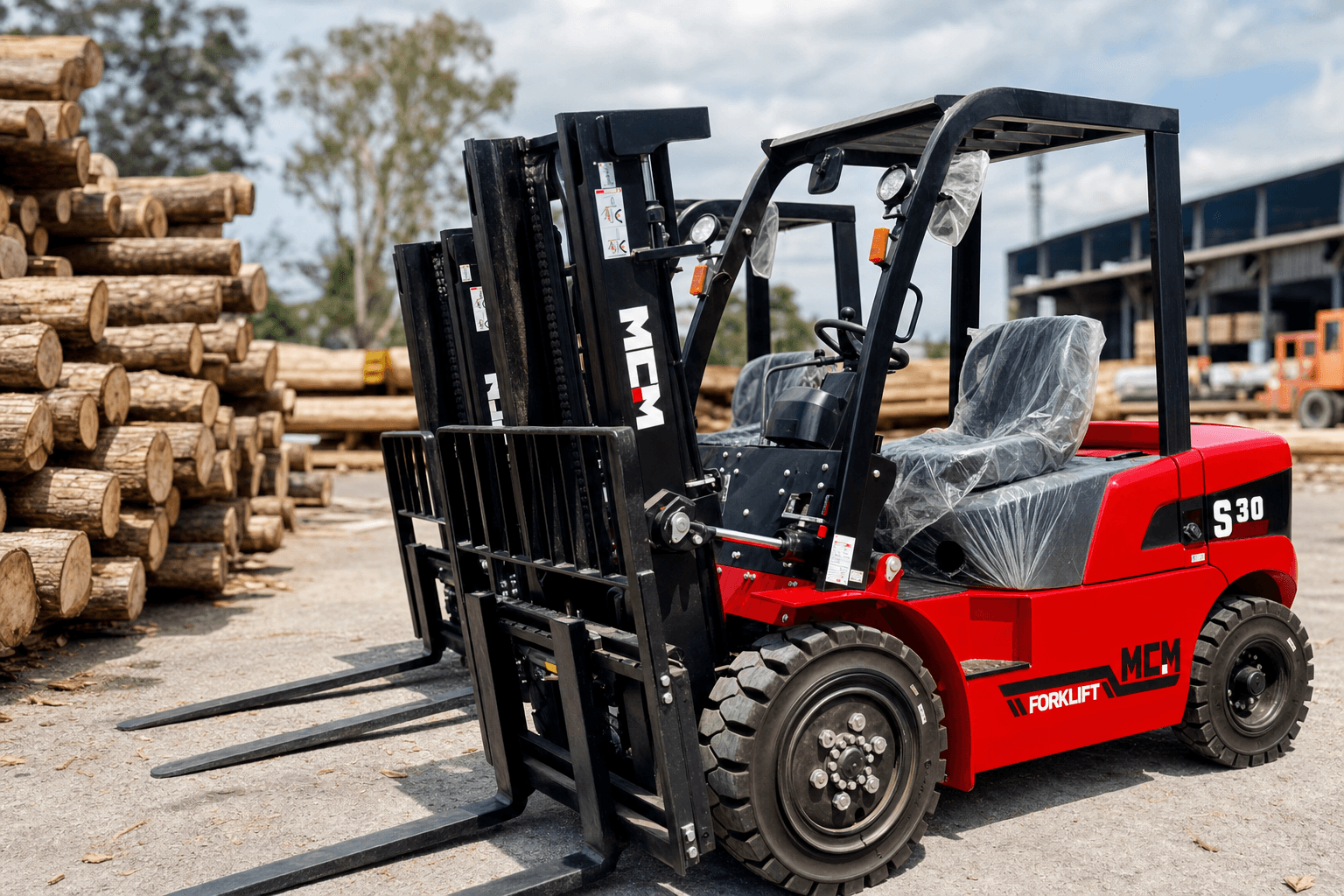
Honest advice requires acknowledging where diesel forklifts remain the better choice. Diesel wins clearly in the following scenarios:
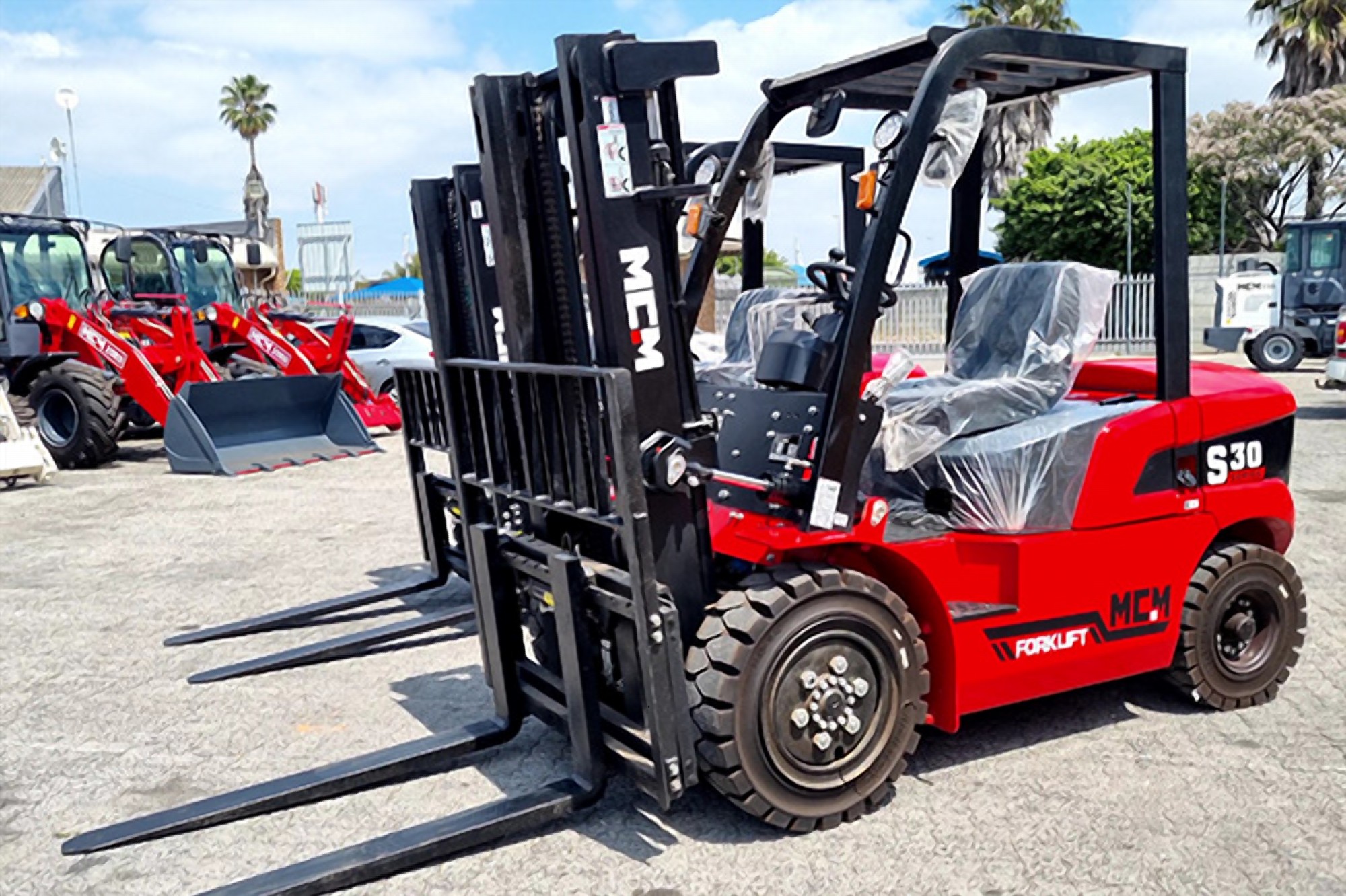
- Outdoor and yard operations: rough terrain, ramps, and variable surfaces favour the higher torque and ground clearance of diesel counterbalance and rough-terrain forklifts.
- High-capacity lifts above 5 tonnes: electric options in the 7–16 tonne class exist but are expensive and less widely supported in South Africa.
- Remote sites without reliable electrical infrastructure: mines, farms, and construction sites where grid power is absent or intermittent.
- Operations with no solar or backup power investment budget: if the capital to mitigate charging downtime is not available, diesel avoids the risk entirely.
- Businesses in load-shedding-intensive municipalities: some local authorities still implement supplementary cuts beyond Eskom schedules, extending daily outage windows to 6–8 hours.
For operators making decisions about complementary equipment — such as materials-handling attachments or site access machinery — the same site-specific logic applies. Our equipment finance guide for first-time buyers covers how to structure a purchase or lease that accounts for ancillary infrastructure costs like solar chargers.
Electric forklift strengths: where it wins in 2026
Electric forklifts remain the preferred choice for the majority of South African indoor warehouse, cold-store, and manufacturing operations, provided the charging infrastructure question is properly addressed. Key advantages include:
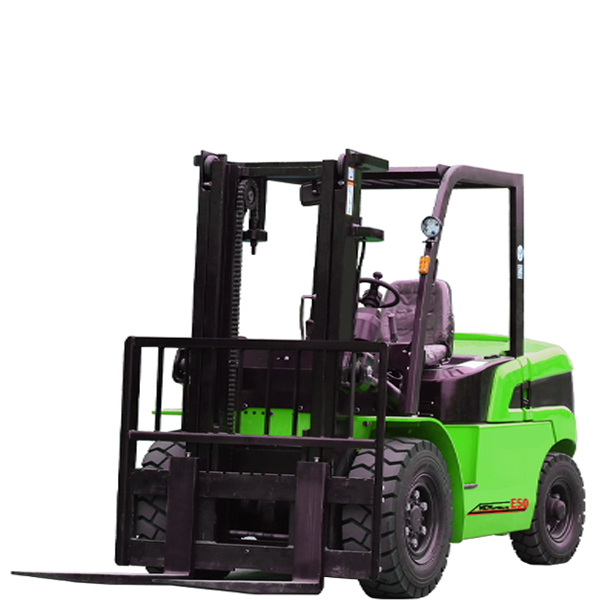
- Substantially lower five-year running costs (R500 000+ saving in many cases)
- No exhaust emissions — critical for food-grade, pharmaceutical, and cold-chain environments
- Lower noise — important for double-shift and night operations near residential areas
- Simpler servicing with fewer consumable parts
- Compatibility with solar and battery backup systems that also protect other business operations
- Improving resale values as the used electric forklift market matures in South Africa
The global materials-handling industry is moving firmly toward electrification, and South African dealers and service networks are investing accordingly. Parts availability and technician training for electric drivetrains have improved markedly since 2022.
Financial incentives and Section 12B considerations
South Africa does not currently offer a direct purchase subsidy for electric forklifts in the way that some European jurisdictions do. However, several financial mechanisms are worth exploring:
- Section 12B of the Income Tax Act: accelerated depreciation is available for renewable energy assets, including solar PV and battery storage systems used to charge electric equipment. A solar charging installation may qualify for a 125% first-year deduction under the 2023 amendments.
- Development finance institutions: the Industrial Development Corporation (IDC) and the National Empowerment Fund (NEF) offer green economy financing lines that may cover electric forklift fleets as part of a broader decarbonisation project.
- Carbon tax offset potential: businesses that can demonstrate reduced Scope 1 emissions from fleet electrification may generate carbon offsets under the Carbon Tax Act framework, though the administrative burden for small fleets is currently high.
- Equipment finance structures: rental and operating lease arrangements allow businesses to avoid large upfront capital outlay. MCM Group works with several finance partners to structure deals that include the forklift, battery, and charger as a single monthly payment.
Making the decision: a practical framework
Before contacting a dealer, answer these five questions honestly:
- How many shifts per day does the forklift run? Single-shift operations have the most flexibility with electric charging windows. Double- and triple-shift operations need Li-ion batteries or multiple battery sets.
- What is the average daily load-shedding duration at your site? Check your municipality’s published schedule and add a 20% buffer for unscheduled cuts.
- Do you have, or are you planning, rooftop solar? If yes, electric is almost always the better long-term choice.
- Is the primary operating environment indoor or outdoor? Indoor warehouses, food processing, and cold stores should default to electric unless capacity requirements push you to diesel.
- What is your five-year total cost of ownership budget? Use the TCO figures in this article as a starting point, then get site-specific quotes.
If your operation spans multiple sites or involves a mix of heavy-lift and warehouse tasks, a mixed fleet — diesel for yard and heavy work, electric for indoor picking and racking — is a legitimate and increasingly common answer. Our team can help you model the TCO for a mixed fleet scenario.
Want to know more or get a site-specific recommendation? Contact MCM Group for pricing, finance options, and a no-obligation quote on diesel and electric forklifts across all our South African branches.
Explore the MCM Group Electric Forklift range
Ready to buy? MCM Group stocks electric forklifts for every operation — here are some popular models:
Browse the full electric forklift range
Frequently asked questions
What are the maintenance costs of diesel versus electric forklifts during load shedding?
Diesel forklifts require servicing every 250–500 operating hours — oil changes, fuel filters, air filters, injector checks, and exhaust system maintenance. Annual service costs typically run R40 000–R70 000 for a 3-tonne machine working a single shift. Electric forklifts have far fewer consumable parts; annual maintenance (battery water, brake fluid, electrical inspections) costs R15 000–R30 000. However, load shedding can accelerate battery degradation if charging is interrupted repeatedly, potentially bringing forward a battery replacement costing R80 000–R150 000 for lead-acid packs. Lithium-ion batteries are more tolerant of partial charging cycles and carry a longer service life, reducing this risk.
How do electric forklifts perform during extended power outages compared to diesel forklifts?
A diesel forklift is completely unaffected by power outages as long as there is fuel available. An electric forklift’s performance during an outage depends entirely on its battery state of charge at the moment the power fails. A fully charged lead-acid battery on a 3-tonne machine typically delivers 6–8 hours of single-shift work. If load shedding prevents a full overnight charge, the available working time is proportionally reduced. Lithium-ion batteries with opportunity-charging capability can be topped up during short grid-on windows, making them significantly more resilient. Businesses can also install UPS or solar-battery backup systems to keep chargers running through outages.
What are the environmental benefits of choosing electric forklifts in load-shedding scenarios?
Electric forklifts produce zero tailpipe emissions at the point of use, which directly improves indoor air quality and reduces worker exposure to CO, NOx, and particulate matter. When charged from the Eskom grid, the indirect carbon footprint is comparable to diesel due to South Africa’s coal-heavy generation mix. However, when charged from on-site solar, the operational carbon footprint drops to near zero. Businesses that electrify their forklift fleets and document the emissions reduction may also benefit from carbon offset mechanisms under South Africa’s Carbon Tax Act framework. Noise pollution is also significantly reduced, which matters for double-shift and night operations near residential areas.
What financial incentives or subsidies are available for electric forklift adoption in South Africa?
There is no direct purchase subsidy for electric forklifts in South Africa as of 2026. However, Section 12B of the Income Tax Act allows accelerated depreciation (up to 125% first-year deduction under 2023 amendments) on solar PV and battery storage assets used to charge electric equipment. Development finance from the IDC and NEF may be available for larger fleet electrification projects framed as green economy investments. Carbon tax offset potential exists for businesses that can demonstrate reduced Scope 1 emissions, though the administrative burden is high for small fleets. Operating lease and rental structures from equipment finance partners allow businesses to spread the cost of the forklift, battery, and charger into a single monthly payment.
How does load shedding affect the overall productivity of businesses using diesel versus electric forklifts?
Diesel forklift operations are largely unaffected by load shedding from a machine-availability perspective — the forklift runs whenever there is diesel in the tank. However, load shedding affects the broader warehouse environment (lighting, conveyor systems, dock levellers, WMS servers) that diesel forklift operators depend on, so productivity losses are still real. Electric forklift operations face the additional risk of reduced battery charge at shift start if charging was interrupted. Studies from South African logistics operators suggest that businesses without backup charging infrastructure can lose 15–30% of planned electric forklift shift time during Stage 4 load shedding. Proper mitigation (solar, UPS, or Li-ion batteries) can reduce this loss to near zero.
What are the charging infrastructure requirements for electric forklifts in regions with frequent load shedding?
A standard 48V / 80A lead-acid charger requires 8–10 hours for a full charge and draws approximately 4–5 kW continuously. For single-shift operations in areas with up to 4 hours of daily load shedding, a UPS battery backup of 10–20 kWh (R80 000–R150 000 installed) is usually sufficient. Double-shift operations or areas with 6–8 hours of daily outages should consider a 15–30 kWp rooftop solar system with 20–40 kWh battery storage (R200 000–R450 000 installed), which can charge one or two forklifts independently of the grid. Lithium-ion forklift batteries with fast-charge capability (2–4 hours to 80%) reduce the charging window required and are the most load-shedding-resilient option. Any charging infrastructure upgrade should be assessed by a qualified electrical engineer and sized to include future fleet growth.