
TLB prices in South Africa vary based on engine power, frame type, and intended application, with MCM Group offering seven models across both compact FEL-frame machines like the MCM 18X at 25kW and full-size tractor-built backhoes like the LGMA LG388 and ACE Phantom at 71-75kW, available from branches in Gauteng, Cape Town, George, and Bloemfontein with finance options and full after-sales support.
TLB prices in South Africa range from entry-level compact models to full-size backhoe loaders depending on engine power, lifting capacity, and features. MCM Group offers seven TLB models at competitive prices with nationwide delivery, finance options, and full after-sales support.
Browse all models in the MCM TLB range or read on for pricing guidance.
Need help choosing the right machine? Contact MCM Group for expert advice and a competitive quote.
If you are researching TLB price in South Africa, the first thing to know is that there is no one-size-fits-all number. In South Africa, the cost of a TLB depends on machine size, engine power, operating weight, frame design, and the level of after-sales support behind the machine. For contractors and farmers, the smartest approach is to compare the job you need done against the class of machine you are buying, not just the sticker price.
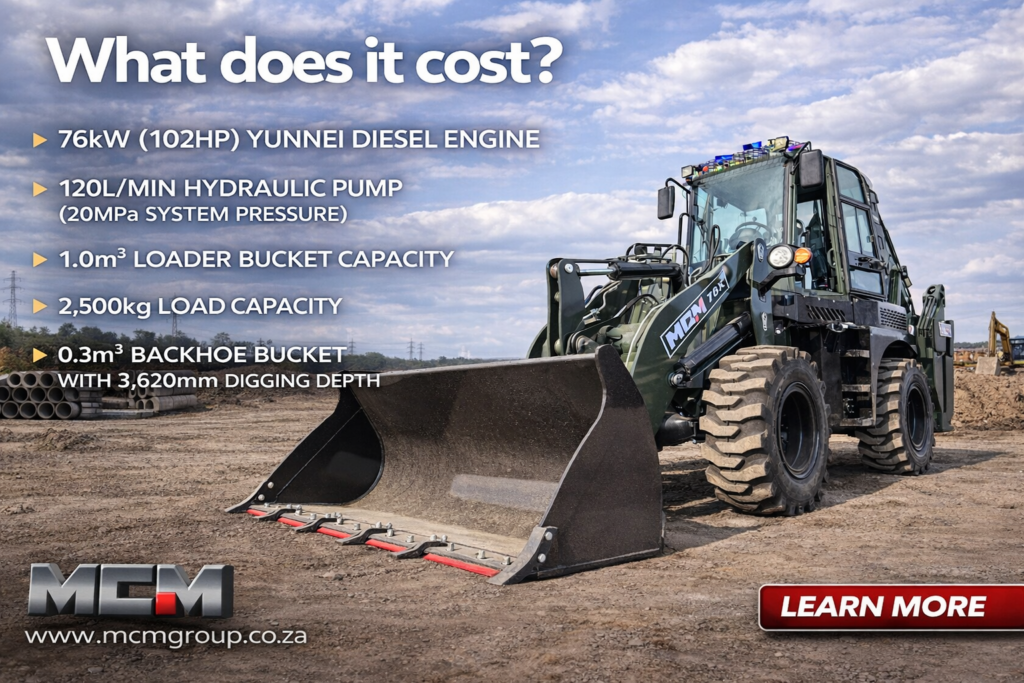
At MCM Group, a leader in construction and agricultural machinery distribution in South Africa, we supply compact and full-size TLBs for a wide range of applications. From the compact MCM 18X TLB to the full-size ACE Phantom TLB, the right machine depends on your workload, terrain, transport needs, and expected return on investment.
What is the average TLB price in South Africa?
A TLB in South Africa can range from a more accessible compact-machine investment to a significantly higher full-size machine purchase. The biggest reason for the price gap is that compact FEL-frame TLBs and tractor-built full-size TLBs are designed for very different workloads.
For light to medium-duty work on farms, plots, estates, small building sites, and municipal maintenance, compact TLBs usually offer the most cost-effective entry point. For heavy daily digging, loading, trenching, and site work, full-size machines generally command a higher price because they deliver more weight, reach, breakout force, and jobsite durability.
Rather than asking, “What is the cheapest TLB?”, buyers should ask, “What machine gives me the best output for my application?” A lower-priced machine that is too small for the work can cost more over time in slower productivity, higher wear, and missed deadlines.
What affects TLB price in South Africa?
The main factors are machine size, power, design, support, and total cost of ownership. A TLB with a lower upfront price is not always the best-value machine once servicing, parts availability, and uptime are considered.
1. Engine power and operating weight
More power and more weight usually mean a higher purchase price. For example, a 25kW compact unit and a 76kW heavy compact machine are not competing in the same working category.
2. Compact FEL-frame vs tractor-built full-size design
Compact FEL-frame TLBs are often ideal where manoeuvrability, transport ease, and versatility matter most. Tractor-built full-size TLBs are better suited to buyers who need larger-scale digging and loading performance every day.
3. Application: farm, contractor, or mixed use
Farmers often prioritise versatility, simple handling, and value. Contractors usually focus on daily production, speed, durability, and the ability to take on larger commercial work.
4. After-sales support and spare parts
This is one of the most overlooked parts of TLB price South Africa research. A machine backed by local parts and service support can protect your business from downtime. In the world of construction and agricultural machinery distribution, support is part of the price equation.
5. Long-term operating cost
Fuel use, routine servicing, tyre wear, and parts availability all influence the real cost of ownership. A TLB that works reliably and is supported nationally often delivers better value than a cheaper machine with weak backup.
Which MCM Group TLB is right for your budget and workload?
The best TLB is the one that matches your workload today while still giving you room to grow. MCM Group offers a strong spread of compact and full-size options for buyers across South Africa.
| Model | Power | Operating Weight | Machine Type | Best For | Investment Level |
|---|---|---|---|---|---|
| MCM 18X TLB | 25kW | 2,350 kg | Compact FEL-Frame | Light farm and property work | Entry-level |
| MCM 27X TLB | 37kW | 2,800 kg | Compact FEL-Frame | Small contractors and mixed farm use | Lower-mid |
| MCM 37X TLB | 36.8kW | 5,000 kg | Compact FEL-Frame | Heavier compact-site work | Mid-range |
| MCM 58X TLB | 58kW | 5,200 kg | Compact FEL-Frame | Strong all-round contractor use | Upper-mid |
| MCM 76X TLB | 76kW | 6,800 kg | Compact FEL-Frame | High-output compact performance | Premium compact |
| LGMA LG388 TLB | 75kW | 8,200 kg | Tractor-Built Full-Size | Larger commercial work | Full-size premium |
| ACE Phantom TLB | 71.5kW | 8,040 kg | Tractor-Built Full-Size | Heavy-duty site and farm work | Full-size premium |
MCM 18X TLB
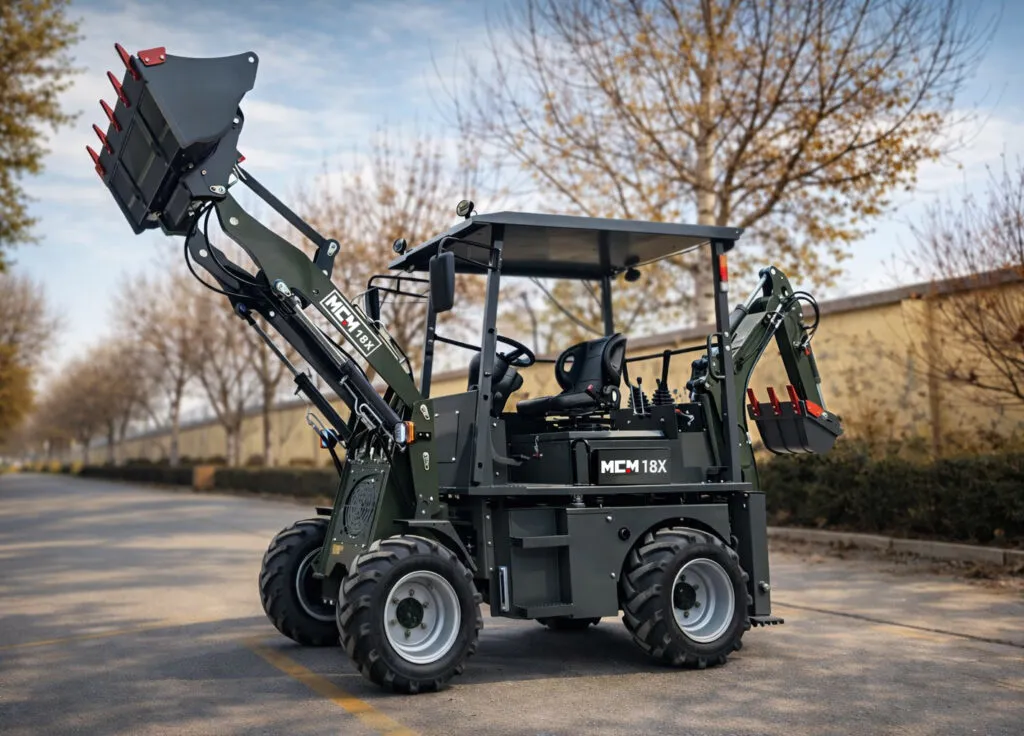
The MCM 18X TLB is the most accessible starting point in the range. With 25kW and a 2,350 kg operating weight, it suits lighter farm jobs, small trenching work, loading, and general property maintenance where compact size matters.
MCM 27X TLB
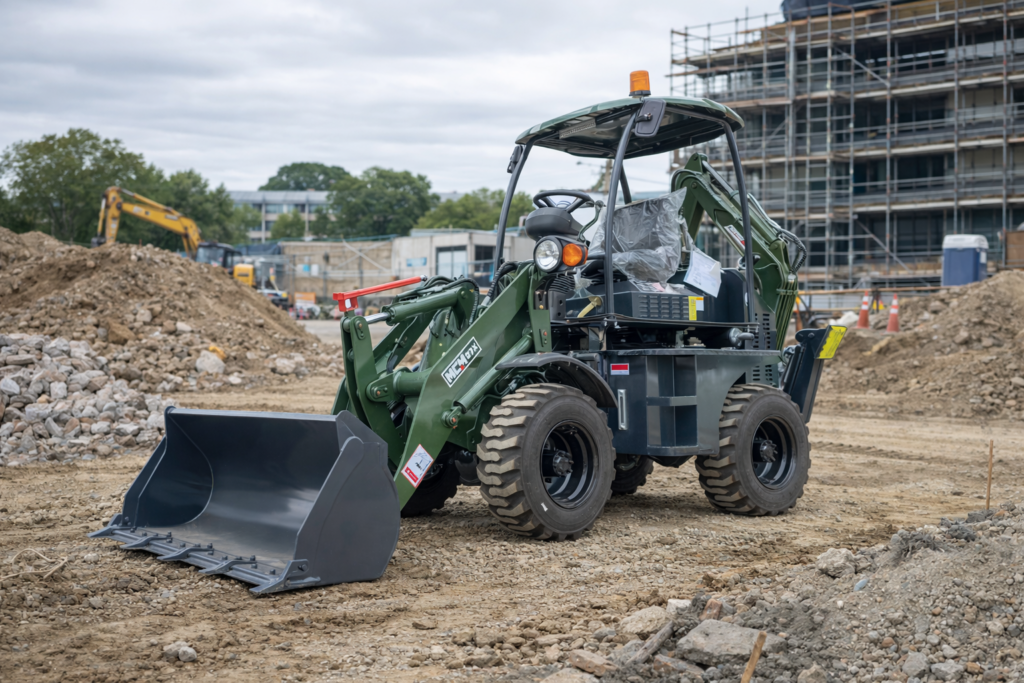
The MCM 27X TLB adds more power at 37kW and 2,800 kg. It is a practical next step for buyers who need more digging and loading capacity without moving into larger, heavier machine territory.
MCM 37X TLB
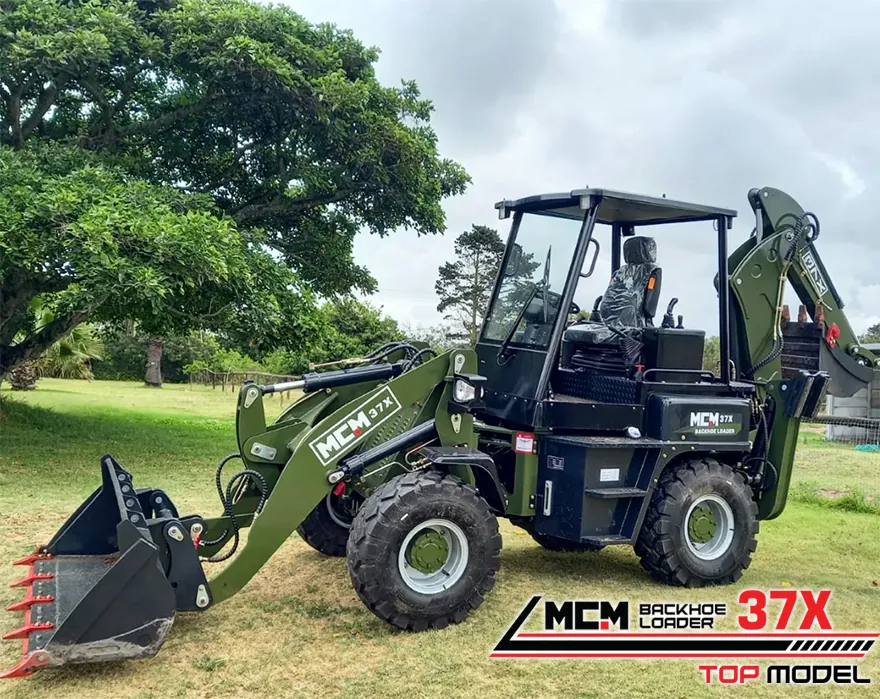
The MCM 37X TLB moves into a more serious working class. At 36.8kW and 5,000 kg, it offers a strong balance between compact design and productive site performance, making it attractive to contractors who want more output without going full-size.
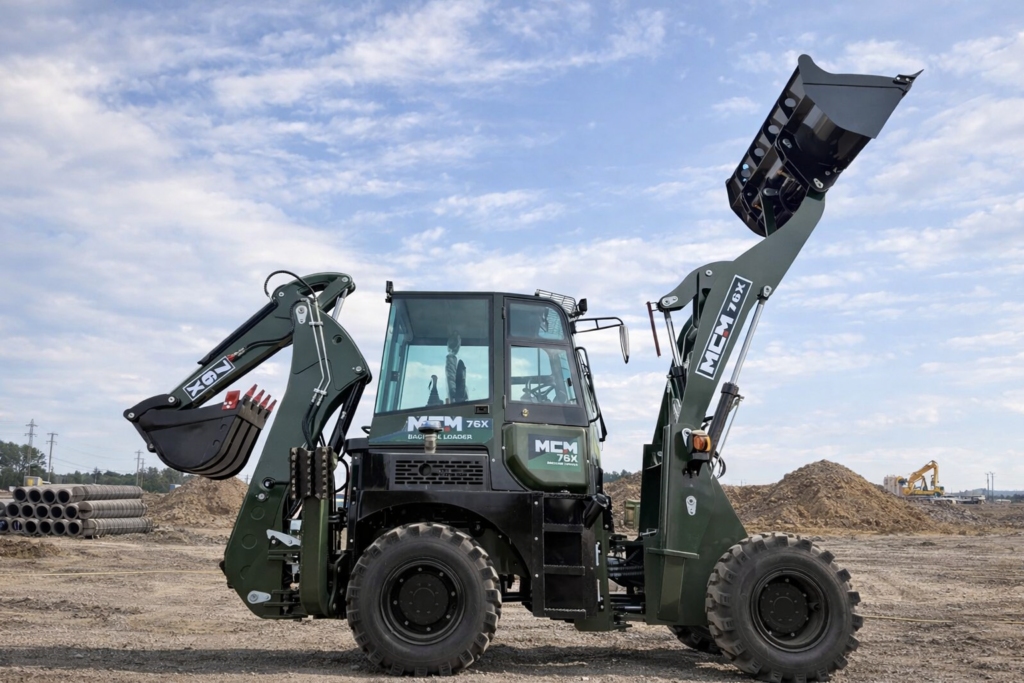
MCM 58X and MCM 76X TLB
The MCM 58X TLB and MCM 76X TLB are aimed at buyers who need higher performance from a compact FEL-frame platform. With 58kW and 76kW respectively, these machines are well-suited to demanding contractor work, larger farms, and businesses that need stronger daily productivity.
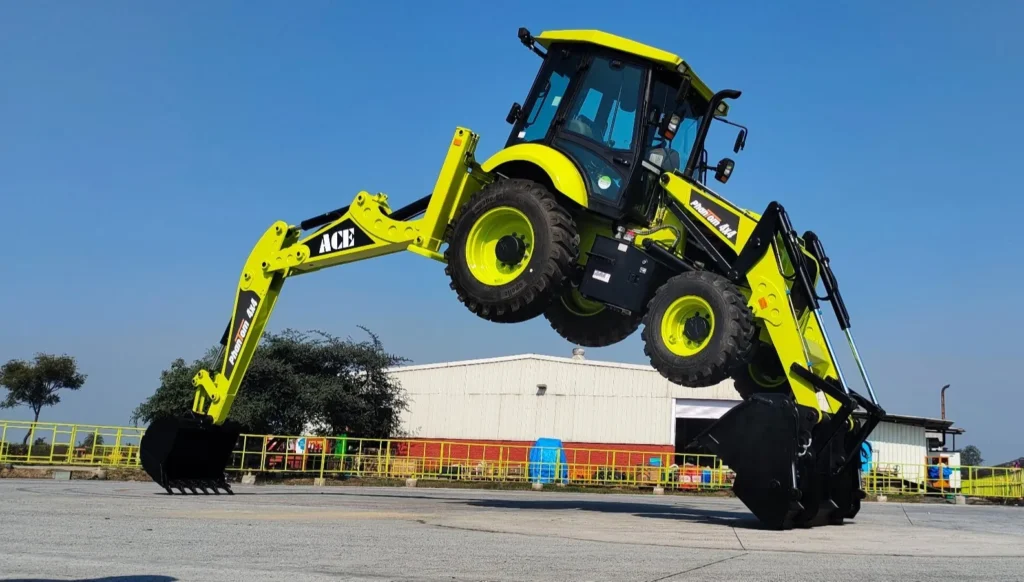
LGMA LG388 and ACE Phantom TLB
At the top end, the LGMA LG388 TLB and ACE Phantom TLB represent full-size, tractor-built capability. With operating weights above 8,000 kg, these machines are ideal for buyers who want a more traditional full-size TLB platform for bigger jobs and tougher site conditions.
Is a compact or full-size TLB better value?
For many farmers and smaller contractors, compact TLBs offer better value because they are easier to transport, easier to manoeuvre, and typically more affordable to buy. For larger operations, full-size TLBs often justify the extra investment through higher output and broader job capability.
Value depends on utilisation. If your machine will handle daily commercial work, a larger machine can pay for itself faster. If you need a flexible machine for intermittent work on farms, plots, or smaller sites, a compact TLB may be the better financial decision.
This is where experienced construction and agricultural machinery distribution matters. Matching the machine to the application is what protects your budget and your uptime.
What should buyers compare before requesting a quote?
Buyers should compare specifications, support, and suitability, not just price. The best quote is the one attached to the right machine for your workload.
Before making a decision, compare:
- Engine power and operating weight
- Frame type and intended use
- Ease of transport between sites
- Local parts support and service backup
- Expected hours of use per month
- Farm versus contractor application
- Future growth in workload
A machine that looks cheaper on paper can become expensive if it is undersized, unsupported, or frequently out of service.
See It in Action
TLB Purchase Checklist
Before making your decision, confirm:
- You have set a budget range that includes delivery and setup costs
- You know the engine power and digging depth your projects require
- You have compared compact vs full-size models for your typical work
- You have confirmed after-sales support and parts availability in your region
- You have explored finance and instalment options
Frequently Asked Questions
What is the best TLB for a small farm in South Africa?
Are full-size TLBs worth the higher cost?
What financing options are available from MCM Group?
How do I choose between the MCM 37X, 58X, and 76X?
Compact TLB vs full-size TLB — which offers better value in South Africa?
What financing options are available from MCM Group?
Find the right TLB for your business
If you are comparing TLB prices in South Africa, the best next step is to match your workload to the right machine class. Explore the full MCM Group range through the MCM 37X TLB, MCM 76X TLB, LGMA LG388 TLB, and ACE Phantom TLB product pages, or browse more industry insights on the MCM Group news blog
CAPE TOWN
- 9 Karee Rd, Kraaifontein Industria,
Cape Town, 7570
SALES
GEORGE
- Jura Lands, Beach Road, Hansmoeskraal, George, 6529
SALES
FREE STATE
- Bloem Showgrounds, Curie Avenue, Generaal De Wet, Bloemfontein, 9301
SALES
GAUTENG
- 26 Sterling Rd, Unit 1, Samrand Business Park, Midrand, 0117