
IMPROVE ROI AND EXTEND EQUIPMENT LIFE WITH ONGOING MAINTENANCE PROCESSES
Heavy Machinery is the most expensive construction & agricultural equipment you own. It’s also the costliest to repair or replace. This guide will show you how to save money and extend the life cycle of your equipment with regular maintenance best practices. MCM requires our clients to carry out Regular Maintenance, and Pre-Start Checks with each day of use, within the warranty period. And MCM highly recommends our clients to continue this Preventative Maintenance after the warranty period is over, hereby extending equipment lifecycle and your return-on-investment. Doing the Pre-Start Checklist will identify commonly overlooked areas of maintenance, and identify simple things you can do to greatly impact the long-term value of your most vital equipment. Even the most powerful and dependable MCM machinery requires basic attention to ensure it provides the exceptionally long service life and unmatched productivity of your MCM construction & agricultural equipment.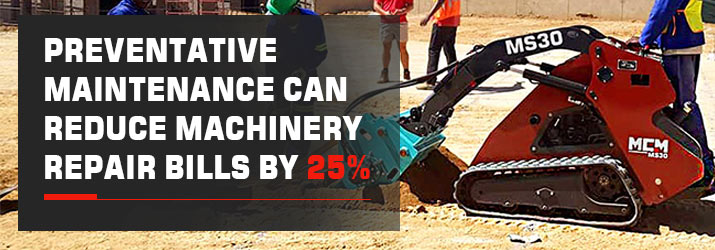
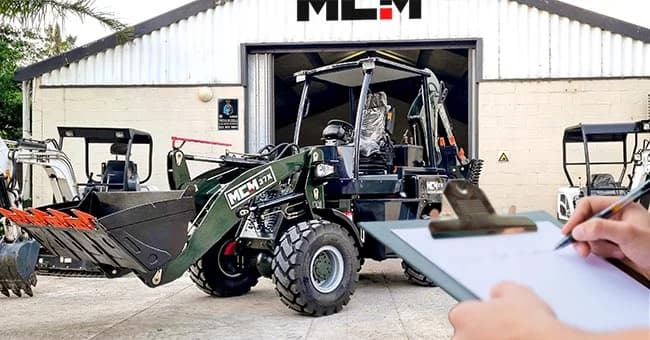
A detailed equipment checklist ensures every machine is safe and ready before work begins. Need help choosing the right machine? Contact MCM Group for expert advice and a competitive quote.
WHY SHOULD YOU TAKE CHARGE OF YOUR EQUIPMENT?
Preventative Maintenance and Inspections should be a DAILY practice to all equipment owners. Before you start up your machine, there are important things to look for that can help avoid unanticipated downtime and expenses in the future. Pre-Start Checks are very important, and must be carried out by the operator, supervisor or responsible individual. Using a proper equipment checklist before every shift helps prevent costly breakdowns and ensures operator safety.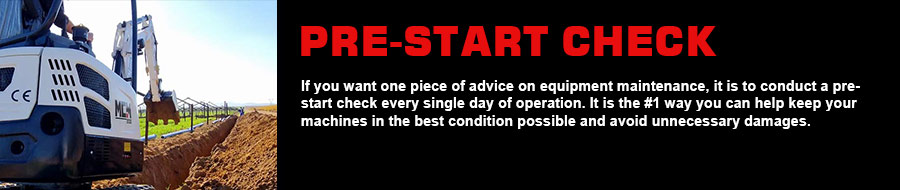
DIFFERENCE BETWEEN PREVENTATIVE MAINTENANCE & SCHEDULED SERVICES
Preventative Maintenance (PM) is comprised of Pre-Start Inspections before every day the equipment is operated. Pre-Start Inspections are an important first line of defense against damage to your machine. PM helps anticipate change, and wear and tear. Corrective actions are taken continuously to ensure reliability and performance. PM involves regular systematic inspections, modification and replacement of components as well as performance testing and analysis. A successful preventive maintenance program extends construction equipment life and minimizes unscheduled downtime caused by equipment breakdown. Benefits from a proper PM program include:- Improved equipment and system reliability.
- Reduction of unexpected breakdown.
- Decrease in expensive parts replacement.
- Extended equipment life.
- Improved resale value.
- Better parts inventory management.
EASY ACCESS TO MCM EQUIPMENT PRE-START CHECKLISTS
To assist our clients with PM, MCM has made available our Pre-Start Checklists for your to download as required. Click on the equipment listed below to download MCM’s Daily Pre-Start Checklists (pdf). Documented preventative maintenance (pre-start) checks & scheduled service records let you keep an accurate picture of a particular machine’s history. Both the daily preventative maintenance and the routine scheduled services should be written in a booklet kept in your maintenance facility or even in the machine itself. This should include the date, what type of servicing was performed, what parts were replaced, when the next regular servicing is required and notations as to any peculiarities or irregularities that were observed.GET TO KNOW YOUR MACHINES INSIDE AND OUT
Thorough product knowledge is invaluable when it comes to implementing an effective PM program. Often, gaining this vital information is as simple as finding it in the machine’s equipment manual that has been researched and documented to isolate issues and prescribe the proper PM. Speaking with your equipment dealer or distributor to find out more about your assets and researching online are invaluable tips in getting the most out of your equipment. Listen to Your Operators Another valuable resource for getting to know your machines inside out is to involve the machine operators. Unless you’re on the controls on a daily basis, you’re not likely to have the intimate knowledge of each machine’s idiosyncrasies and quirks. Daily operators get a “feel” for the machine. Operators sense when something’s amiss, and they’ll tell you if they are trained and expected to do so. Listening to them and appreciating their input is a wise PM strategy. Stop Operations When You Suspect a Problem Stopping operation and dealing with a suspected problem between scheduled maintenance periods can be an enormous savings in failure costs and subsequent losses. Don’t restrict maintenance to rigid schedules. Instead, allow the flexibility to respond with proactive intervention. Remember, each client operates their equipment in different terrains, which very often impact your equipment differently.ARE YOUR OPERATORS TRAINED?
Knowledgeable machinery operators are more productive and cause less wear on machinery than untrained workers. Knowledgeable operators are also going to be safer to themselves and others working nearby. Properly trained operators will be more respectful of their equipment and more likely to look after it before, during and after scheduled maintenance intervals. That’s going to save you money in repairs and replacement. MCM highly recommends our clients to ensure the operators of their MCM equipment to be formerly trained to operate the specific equipment types, in some cases, it is a requirement during the warranty period.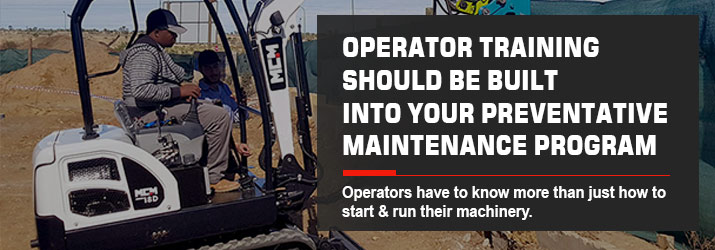 Operator training should be built into your preventive maintenance program. Operators have to know more than just how to start and run their machinery. They need to be aware of what routine, day-to-day maintenance tasks are required and how to perform them without fail. They also need to understand how their equipment really works, as this understanding enables them to operate and look after your machinery.